

1. Introduction: Why Website Development Cost 2026 Vary So Much Globally
In 2026, website development is no longer just about “creating a website.” It has become a strategic investment that directly impacts brand credibility, customer acquisition, conversion rates, and long-term business scalability. Yet, one of the most confusing aspects for business owners worldwide remains the same:
Why does website development cost ₹30,000 in India (Charvix Technology), $15,000 in the USA, £8,000 in the UK, or AED 40,000 in the UAE—for seemingly similar requirements?
The answer lies in a complex mix of economic, technical, and market-driven factors rather than simple pricing differences.
According to Clutch’s Global Web Development Pricing Report, web development costs vary significantly based on:
- Local labor economics
- Developer experience and specialization
- Compliance requirements (GDPR, ADA, HIPAA, etc.)
- Client expectations regarding UI/UX, performance, and security
(Source: Clutch.co – How Much Does a Website Cost?, 2024)
In high-income economies like the United States and the United Kingdom, web development pricing reflects higher living costs, salaries, and stricter regulatory requirements. In contrast, countries like India benefit from a large, technically skilled workforce and lower operational expenses, allowing agencies to deliver competitive quality at a lower cost.
When businesses compare the cost of building a website in India vs USA, the price gap often creates confusion. website development services in India
Meanwhile, the UAE represents a hybrid market. While many development teams outsource backend work, the pricing reflects premium branding, local business regulations, and strong demand for enterprise-grade digital experiences—especially in sectors like real estate, fintech, healthcare, and tourism.
Another critical reason for global cost variation is what businesses expect from a website in 2026. Modern websites are expected to deliver:
- Core Web Vitals optimization
- Mobile-first & accessibility-compliant design
- Strong cybersecurity measures
- SEO-ready architecture
- Integration with CRM, payment gateways, analytics, and automation tools
As reported by Google’s Web.dev performance benchmarks, websites that fail to meet performance and UX standards lose both search visibility and user trust, increasing the cost of poor development decisions.
(Source: Google Web.dev – Core Web Vitals Documentation)
This guide is designed to cut through pricing confusion by offering a country-by-country comparison of website development costs in 2026, backed by real industry data—so business owners can make informed, ROI-driven decisions rather than relying on guesswork or unrealistic quotes.

2. How Website Development Pricing Has Evolved (2020–2026 Trends)
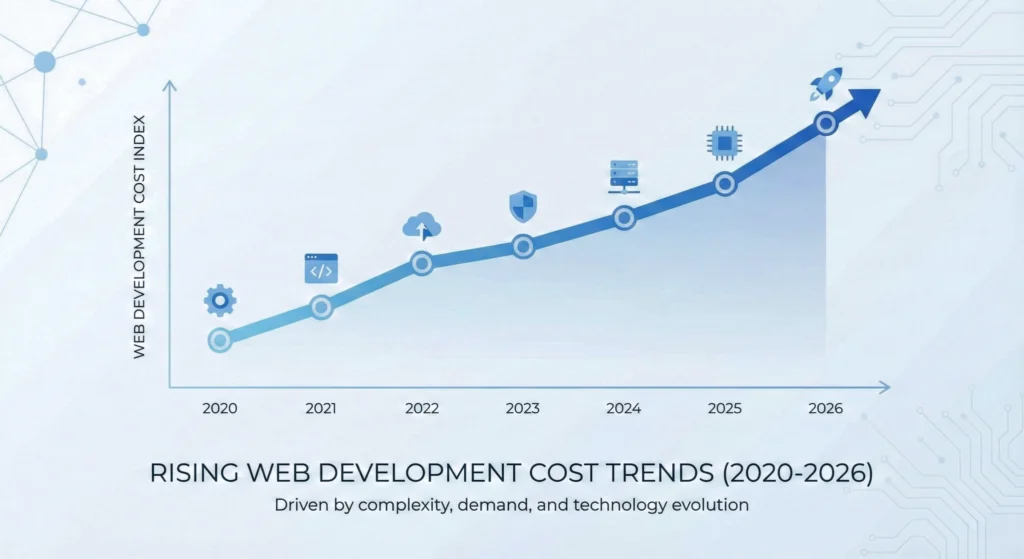
To understand website development costs in 2026, it’s essential to look at how pricing has evolved over the last six years. The changes are not arbitrary—they reflect global economic shifts, technological advancements, and rising digital expectations.
Post-2020 Digital Acceleration
The COVID-19 pandemic accelerated digital adoption worldwide. According to McKinsey’s Global Digital Transformation Report, companies advanced their digital initiatives by an average of 3–4 years between 2020 and 2022.
(Source: McKinsey & Company – The COVID-19 Digital Shift)
This surge created unprecedented demand for developers, pushing prices upward—especially in Western markets.
Rising Developer Salaries Worldwide
Data from Glassdoor and Stack Overflow Developer Surveys shows consistent growth in developer salaries:
- USA: Average web developer salary increased by ~20–25% between 2020 and 2025
- UK: Salary growth averaged ~18–22% during the same period
- India: Growth remained lower (~10–15%) due to high talent supply
(Source: Glassdoor Salary Insights, 2024 | Stack Overflow Developer Survey)
These salary trends directly influence hourly development rates and total project costs. These shifts have reshaped the average website development cost worldwide.
Shift from “Websites” to “Digital Products”
In 2020, most small businesses needed basic informational websites. By 2026, the expectation has shifted toward:
- Conversion-focused UI/UX
- SEO-driven site architecture
- Headless CMS and API-based systems
- Performance optimization for mobile-first indexing
According to Statista, over 60% of global website projects in 2025 involved some level of customization beyond basic templates.
(Source: Statista – Web Development Market Analysis, 2025)
Customization significantly increases development time and cost—especially in markets where developer hours are expensive.
Increased Compliance & Security Costs
From GDPR in Europe to ADA compliance in the USA and data-hosting regulations in the UAE, compliance has become a non-negotiable cost factor.
A report by IBM Security shows that the average cost of a data breach globally reached $4.45 million in 2023, pushing businesses to invest more in secure development practices. These shifts have reshaped.
(Source: IBM – Cost of a Data Breach Report)
As a result, modern websites require:
- Secure coding standards
- Regular vulnerability testing
- SSL, firewalls, and secure hosting configurations
All of these elements contribute to higher development budgets compared to pre-2020 websites.
The India Advantage in a Global Context
While costs increased globally, India retained its position as the most cost-effective high-quality development destination due to:
- Large English-speaking tech workforce
- Mature outsourcing ecosystem
- Competitive pricing without compromising core functionality
This is why platforms like Upwork and GoodFirms consistently rank Indian web development companies among the top outsourcing partners globally.
(Source: GoodFirms – Global Web Development Leaders, 2024)
3. Key Factors That Influence Website Development Costs Worldwide
Website development costs in 2026 are not determined by geography alone. Two businesses in the same country can receive vastly different quotations for similar-looking websites. This is because pricing is shaped by multiple technical, operational, and strategic factors.
Below are the most important cost-driving factors, validated by global web development industry research.
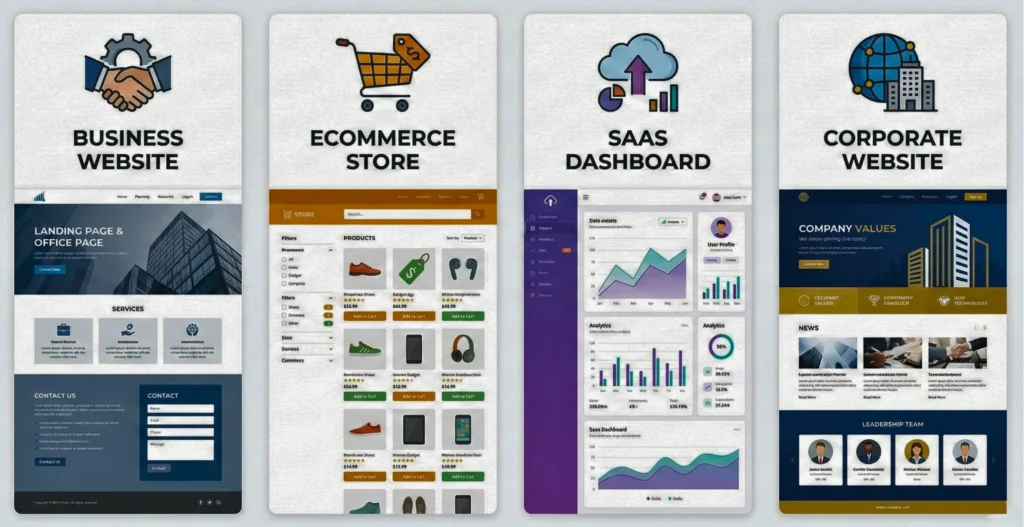
Type of Website Being Built
The most fundamental pricing variable is what kind of website is required.
According to Clutch’s Web Development Cost Guide, website pricing increases exponentially as functionality and scalability requirements grow.
(Source: Clutch.co – Website Cost Breakdown, 2024)
- Static / Informational Websites
Minimal backend logic, limited pages, low maintenance - Dynamic Business Websites
CMS-driven, admin panels, blog systems, lead forms - E-commerce Websites
Payment gateways, inventory, user accounts, security layers - Custom Web Applications / SaaS
Complex workflows, APIs, databases, cloud infrastructure
Each level adds development hours, testing effort, and long-term maintenance costs.
UI/UX Design Expectations
Design is no longer just visual—it is directly tied to conversions and SEO.
Modern web design and development pricing is influenced by UI/UX depth, not just coding hours.
According to Forrester Research, a well-designed user interface can increase website conversion rates by up to 200%, while better UX design can improve conversions by 400%.
(Source: Forrester Research – The Value of UX Design)
This has led to:
- Higher demand for UX research
- Wireframing & prototyping tools
- Accessibility-focused design (WCAG compliance)
Countries like the USA and UK typically invest more heavily in UX research, which significantly raises project budgets compared to India.
Technology Stack & CMS Selection
The choice of technology plays a major role in determining cost.
As per W3Techs, WordPress powers over 43% of all websites globally, making it the most cost-efficient CMS for many use cases.
(Source: W3Techs – CMS Usage Statistics, 2025)
However:
- Custom frameworks (Laravel, React, Next.js, Node.js)
- Headless CMS setups
- Enterprise platforms (Adobe Commerce, Sitecore)
…require specialized developers, longer timelines, and higher hourly rates—especially in Western markets.
Custom Features & Third-Party Integrations
Modern websites rarely operate in isolation.
Common integrations include:
- CRM systems (HubSpot, Salesforce)
- Payment gateways (Stripe, PayPal)
- Marketing automation tools
- Analytics & tracking platforms
- ERP or inventory systems
According to GoodFirms, nearly 70% of custom website projects in 2025 involved at least one third-party integration.
(Source: GoodFirms – Web Development Industry Report, 2024)
Each integration adds:
- API development time
- Testing & security validation
- Ongoing maintenance costs
Development Team Structure
Who builds the website matters as much as what is being built.
Typical team structures include:
- Freelancers (lowest upfront cost, higher risk)
- Small agencies (balanced cost & accountability)
- Enterprise agencies (high cost, high governance)
Hourly rate differences (average):
- India: $15–40/hour [ This rate refers to Charvix Technology ]
- UK: £50–100/hour
- USA: $75–150/hour
- UAE: AED 150–400/hour
(Source: Upwork Rate Insights | Glassdoor Salary Data, 2024)
Maintenance, Hosting & Long-Term Support
Many businesses underestimate post-launch costs.
According to Statista, companies spend 15–25% of initial development cost annually on website maintenance, updates, and security.
(Source: Statista – Website Maintenance Cost Analysis)
Ignoring this factor often leads to budget overruns later.
4. Website Development Cost Breakdown by Website Type (2026 Estimates)
To provide clarity, let’s break down average global website development costs by website type in 2026. These ranges are compiled using data from Clutch, GoodFirms, Upwork, and Statista.
Note: These are industry averages, not fixed prices.
Basic Business Website
Includes:
5–10 pages, responsive design, contact forms, basic SEO structure
- India: $150 – $1,000 [ This rate refers to Charvix Technology ]
- USA: $3,000 – $7,000
- UK: £2,000 – £5,000
- UAE: AED 8,000 – 20,000
(Source: Clutch Small Business Website Pricing)
Professional Corporate Website
Includes:
Custom UI/UX, CMS, blog, lead funnels, performance optimization
- India: $200 – $3,000 [ This rate refers to Charvix Technology ]
- USA: $8,000 – $20,000
- UK: £6,000 – £15,000
- UAE: AED 20,000 – 45,000
(Source: GoodFirms Corporate Web Cost Guide)
E-commerce Website
Includes: Security, payment gateways and scalability.
Security, payment gateways and scalability directly impact the e-commerce website development cost rises sharply when APIs and dashboards are added.commerce website development cost.
- India: $500 – $5,000 [ This rate refers to Charvix Technology ]
- USA: $15,000 – $50,000
- UK: £10,000 – £30,000
- UAE: AED 35,000 – 80,000
(Source: Statista – E-commerce Development Costs)
Custom Web Applications & SaaS Platforms
Includes:
Custom logic, APIs, cloud hosting, dashboards, security audits.
The custom website development cost rises sharply when APIs and dashboards are added.
- India: $500 – $15,000+ [ This rate refers to Charvix Technology ]
- USA: $40,000 – $150,000+
- UK: £30,000 – £100,000+
- UAE: AED 80,000 – 250,000+
(Source: Clutch – Custom Software Development Pricing)
These differences clearly show that pricing reflects ecosystem maturity, compliance requirements, and labor economics, not just development skill.
5. Website Development Costs in India (2026)
Over the last decade, India has firmly established itself as one of the world’s most cost-effective destinations for website development. In 2026, India continues to attract startups, SMEs, and even enterprise clients from the USA, UK, and UAE—not just because of pricing, but because of value delivery.
Average Hourly Rates in India (2026)
According to data from Upwork, GoodFirms, and Glassdoor, hourly development rates in India remain significantly lower than Western markets:
- Junior developers: $10 – $20/hour
- Mid-level developers: $20 – $30/hour
- Senior developers / specialists: $30 – $40/hour
(Source: Upwork Global Talent Rates, 2024 | Glassdoor India Salary Insights)
The key reason behind these rates is lower cost of living combined with a large, competitive talent pool, not a lack of technical capability.
Website Development Cost Range by Website Type India
Based on aggregated data from Clutch and GoodFirms, average website development costs in India for 2026 are:
- Basic business website: $150 – $1,000
- Professional corporate website: $200 – $3,000
- E-commerce website: $500 – $5,000
- Custom web applications / SaaS: $5,000 – $15,000+
(Source: Clutch.co – India Web Development Pricing Guide)
These costs typically include:
- Responsive design
- CMS integration (commonly WordPress or Laravel-based systems)
- Basic SEO structure
- Standard security practices
Why India Remains a Global Web Development Hub
Several structural factors keep India highly competitive:
- Large Skilled Workforce
India produces over 1.5 million engineering graduates annually, many with web and software development skills.
(Source: AICTE India Technical Education Statistics) - Strong Outsourcing Ecosystem
Platforms like GoodFirms and Clutch consistently rank Indian agencies among top global service providers. - English Proficiency & Time-Zone Advantage
English communication and overlapping work hours with the UK, UAE, and partial USA time zones reduce coordination friction. - Mature Technology Adoption
Indian teams work extensively with modern stacks such as WordPress, Laravel, React, Next.js, and headless CMS setups.
Limitations & Considerations When Hiring in India
While India offers excellent cost efficiency, businesses should be aware of:
- Quality variance between agencies and freelancers
- The importance of clear documentation and scope definition
- Need for structured project management for complex projects
When these factors are managed correctly, India often delivers the highest ROI per dollar spent in website development.
6. Website Development Costs in the United States (2026)
The United States represents the premium end of the global website development market. In 2026, US-based agencies and developers continue to command the highest rates—but these costs reflect more than just labor expenses.
Average Hourly Rates in the USA (2026)
According to Glassdoor, Upwork, and Stack Overflow salary data, average hourly rates in the USA are:
- Junior developers: $50 – $75/hour
- Mid-level developers: $75 – $120/hour
- Senior developers / specialists: $120 – $150+/hour
(Source: Glassdoor US Developer Salaries, 2024 | Upwork US Rates)
High rates are driven by:
- High cost of living
- Employee benefits & insurance
- Strong demand for senior-level expertise
Website Development Cost Range by Website Type (USA)
Based on Clutch and Statista industry benchmarks, typical US pricing in 2026 is:
- Basic business website: $3,000 – $7,000
- Professional corporate website: $8,000 – $20,000
- E-commerce website: $15,000 – $50,000
- Custom web applications / SaaS: $40,000 – $150,000+
(Source: Clutch – US Web Development Cost Analysis)
These projects usually include:
- Advanced UX research
- Conversion optimization
- Compliance with ADA, WCAG, and data protection laws
- High-end security and performance testing
Why Website Development Costs Are Highest in the USA
Several structural and regulatory factors push US pricing upward:
- Compliance & Legal Standards
Websites often need to meet ADA accessibility standards, HIPAA (for healthcare), or industry-specific regulations. - UX & Conversion-Focused Development
US businesses heavily invest in data-driven UX, CRO, and performance optimization. - Enterprise-Level Expectations
Scalability, uptime guarantees, SLAs, and long-term support are often mandatory.
According to Forrester Research, US companies spend more on UX and optimization because digital experience is a key competitive differentiator.
(Source: Forrester – Digital Experience Market Insights)
When Hiring a US Agency Makes Sense
US-based development is often ideal when:
- Compliance requirements are strict
- Brand positioning is premium
- The project involves complex enterprise workflows
- Real-time collaboration is critical
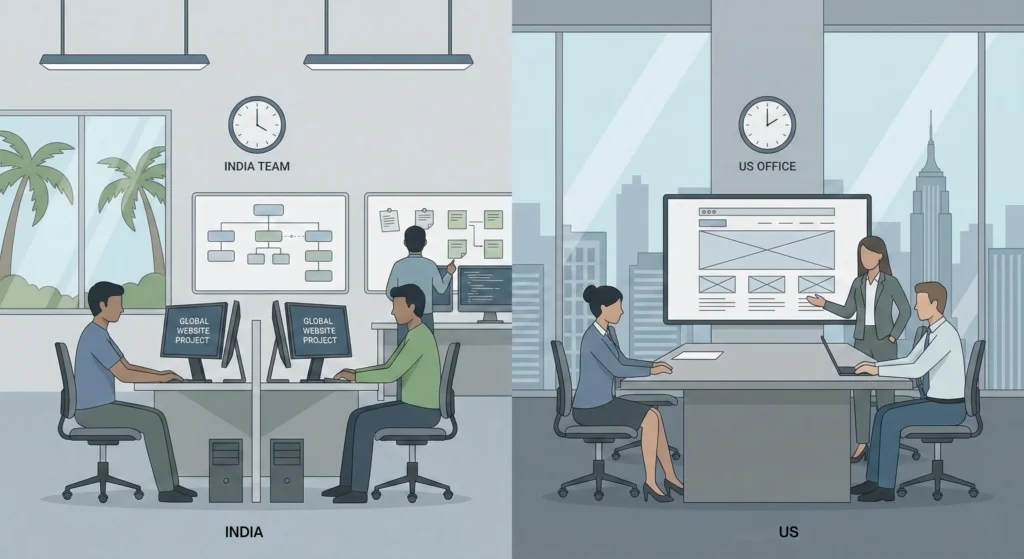
However, from a pure cost-to-functionality perspective, many businesses now adopt a hybrid model—strategy and UX from the USA, development from cost-efficient markets like India.
7. Website Development Costs in the United Kingdom (2026)
The United Kingdom sits between the United States and India in terms of website development pricing—but in 2026, UK development costs lean closer to the premium segment, especially for design-driven and compliance-heavy projects.
UK businesses place strong emphasis on brand identity, accessibility, data protection, and long-term scalability, which directly impacts development budgets.
Average Hourly Rates in the UK (2026)
Based on data from Glassdoor, Upwork, and CWJobs, average hourly rates in the UK are:
- Junior developers: £35 – £50/hour
- Mid-level developers: £50 – £80/hour
- Senior developers / specialists: £80 – £120+/hour
(Source: Glassdoor UK Developer Salaries, 2024 | Upwork UK Talent Rates)
Rates vary significantly between:
- London & South East (highest)
- Northern England & Scotland (slightly lower)
Website Development Cost Range by Website Type (UK)
According to Clutch UK pricing data and Statista market analysis, average costs in 2026 are:
- Basic business website: £2,000 – £5,000
- Professional corporate website: £6,000 – £15,000
- E-commerce website: £10,000 – £30,000
- Custom web applications / SaaS: £30,000 – £100,000+
(Source: Clutch.co – UK Web Development Pricing Guide)
These costs usually include:
- Custom UI/UX design
- GDPR-compliant architecture
- Accessibility considerations (WCAG)
- SEO-friendly site structure
Why UK Website Development Costs Are Relatively High
Several factors drive UK pricing upward:
- GDPR & Data Protection Compliance
UK websites must follow GDPR standards even post-Brexit, increasing development and legal review costs. - Design-Centric Development Culture
UK agencies are known for strong branding, typography, and user experience—often requiring dedicated design teams. - Higher Operational Costs
Office space, salaries, and taxation contribute to higher agency overheads.
According to UK Government Digital Service (GDS) guidelines, accessibility and usability are mandatory for public-facing digital services—setting a high benchmark even for private businesses.
(Source: UK Government Digital Service – Accessibility Standards)
When UK Developers Are the Right Choice
Hiring UK-based developers makes sense when:
- Brand perception and design quality are top priorities
- GDPR compliance is critical
- Target audience is primarily UK or EU-based
- Content-heavy or editorial platforms are involved
However, for purely functional websites, many UK businesses outsource development to India or Eastern Europe while keeping design and strategy local.
8. Website Development Costs in the UAE (2026)
The UAE represents a premium, brand-driven website development market, particularly in cities like Dubai and Abu Dhabi. In 2026, website development in the UAE is less about cost efficiency and more about visual excellence, rapid delivery, and enterprise-grade execution.
Average Hourly Rates in the UAE (2026)
According to Glassdoor Middle East data and regional recruitment platforms, typical hourly rates are:
- Junior developers: AED 150 – 250/hour
- Mid-level developers: AED 250 – 400/hour
- Senior developers / specialists: AED 400 – 600+/hour
(Source: Glassdoor UAE Salary Insights, 2024)
Rates are higher due to:
- High cost of living
- Dependence on expatriate talent
- Agency-heavy market structure
Website Development Cost Range by Website Type (UAE)
Based on Clutch MENA data and Statista regional insights, 2026 pricing typically falls in these ranges:
- Basic business website: AED 8,000 – 20,000
- Professional corporate website: AED 20,000 – 45,000
- E-commerce website: AED 35,000 – 80,000
- Custom web applications / SaaS: AED 80,000 – 250,000+
(Source: Clutch – MENA Web Development Market Report)
These projects often include:
- Premium UI/UX design
- Multilingual support (Arabic & English)
- Strong hosting & security setup
- High-performance expectations
Why Website Development Is Expensive in the UAE
- Brand & Presentation-First Market
UAE businesses—especially in real estate, luxury, hospitality, and fintech—prioritize visual appeal and premium branding. - Local Business Regulations
Hosting preferences, data handling norms, and local compliance requirements add cost layers. - Agency-Centric Ecosystem
Most UAE projects are executed by agencies that may outsource technical work internationally while maintaining local project management.
According to Dubai Chamber of Commerce, digital presence quality is a major competitive differentiator for UAE businesses, pushing demand for high-end websites.
(Source: Dubai Chamber – Digital Business Trends Report)
Smart Cost Strategy Used in the UAE
A common approach in the UAE market is:
- Strategy, branding & client communication handled locally
- Development & engineering outsourced to India or other cost-efficient regions
This hybrid model balances premium quality with controlled costs.
9. India vs USA vs UK vs UAE: Complete Website Development Cost Comparison (2026)
Global website development pricing ko samajhne ka sabse practical tareeqa hai side-by-side comparison. Neeche diya gaya comparison Clutch, GoodFirms, Statista, Upwork aur Glassdoor ke aggregated data par based hai.
Note: These figures are industry averages; exact quotations may vary depending on the project scope.
Average Website Development Cost Comparison (2026)
Below is a clear breakdown of average website development charges per country in 2026.
| Website Type | India (Charvix Technology) | USA | UK | UAE |
|---|---|---|---|---|
| Basic Business Website | $150 – $1,000 | $3,000 – $7,000 | £2,000 – £5,000 | AED 8,000 – 20,000 |
| Professional Corporate Website | $200 – $3,000 | $8,000 – $20,000 | £6,000 – £15,000 | AED 20,000 – 45,000 |
| E-commerce Website | $500 – $5,000 | $15,000 – $50,000 | £10,000 – £30,000 | AED 35,000 – 80,000 |
| Custom Web App / SaaS | $500 – $15,000+ | $40,000 – $150,000+ | £30,000 – £100,000+ | AED 80,000 – 250,000+ |
Sources:
- Clutch.co – Global Web Development Pricing
- GoodFirms – Cost of Web Development by Region
- Statista – Web Development Market Analysis
- Upwork & Glassdoor – Developer Rate Insights (2024–2025)
What This Comparison Clearly Shows
- India offers the highest cost efficiency
For businesses focused on ROI, scalability, and functionality, India consistently delivers maximum value per dollar. - USA is the most expensive—but also the most regulated
Pricing reflects strict compliance (ADA, HIPAA), deep UX research, and enterprise-grade expectations. - UK balances quality and regulation
UK pricing is driven by GDPR compliance, design maturity, and content-heavy platforms. - UAE pricing reflects brand premium, not development complexity alone
Many UAE projects include branding, strategy, and presentation layers that inflate total cost.
According to Clutch’s Global Outsourcing Trends, over 70% of US and UK businesses now outsource at least part of their web development work to reduce costs while maintaining quality.
(Source: Clutch – Global Outsourcing Survey)
Cost vs Value: The Real Decision Metric
Choosing a country should not be about the lowest price, but about:
- Business goals
- Target audience
- Compliance needs
- Long-term scalability
- Support & maintenance expectations
A $2,000 website that generates leads consistently can outperform a $20,000 website that fails to convert.
10. Hidden Costs Many Businesses Ignore While Budgeting for a Website
One of the biggest reasons businesses feel disappointed after launching a website is poor cost planning. The initial development quote is only a part of the total investment.
According to Statista, businesses underestimate total website costs by 20–30% on average due to hidden or overlooked expenses.
(Source: Statista – Digital Project Cost Overruns)
Below are the most commonly ignored costs in website development.
Ongoing Maintenance & Updates
Websites are not “build once and forget” assets.
Typical annual maintenance costs:
- Security updates
- Plugin & framework upgrades
- Bug fixes
- Performance optimization
As per industry benchmarks, Annual website maintenance cost is usually 15–25% of initial development.
(Source: Statista – Website Maintenance Cost Analysis)
Hosting, CDN & Infrastructure
Cheap hosting may reduce upfront cost but increases:
- Downtime risk
- Page load time
- Security vulnerabilities
According to Google Web.dev, page speed directly impacts SEO rankings and conversion rates.
(Source: Google Web.dev – Performance Best Practices)
SEO & Content Optimization
Many websites are launched without proper on-page SEO, resulting in:
- Poor search visibility
- Dependence on paid ads
SEO-ready architecture, schema, and content optimization are often add-on costs, not included in base development quotes. SEO friendly website development.
Security & Compliance Costs
Security features often excluded from basic quotes:
- SSL & firewall setup
- Malware protection
- Accessibility compliance
- Data privacy configurations
According to IBM Security, the cost of fixing vulnerabilities post-launch is significantly higher than implementing security during development.
(Source: IBM – Cost of a Data Breach Report)
Redesign & Scope Creep
Unclear requirements lead to:
- Repeated design changes
- Feature additions mid-project
- Timeline delays
This is one of the most common causes of budget overruns, especially when working without a detailed scope document.
Post-Launch Support & Scaling
As traffic grows, businesses often need:
- Server upgrades
- Performance tuning
- Feature enhancements
These costs are rarely considered during initial budgeting.
Why Transparent Cost Planning Matters
The most successful website projects:
- Have clear scope documentation
- Include post-launch costs in planning
- Focus on long-term ROI instead of just launch price
This is where experienced development partners add real value—not by being cheap, but by being transparent and realistic.
11. Outsourcing vs Local Development: What Makes More Sense in 2026?
In 2026, the question is no longer “Should we outsource website development?”
The real question businesses ask is:
“Which parts should we keep local, and which should we outsource?”
According to Deloitte’s Global Outsourcing Survey, over 70% of companies worldwide outsource at least one IT or digital function, primarily to reduce costs and access specialized talent.
(Source: Deloitte – Global Outsourcing Survey)
Local Website Development: Pros & Cons
Advantages of Local Development
- Easier communication and real-time collaboration
- Better understanding of local market behavior
- Strong alignment with regional compliance and regulations
- Faster in-person meetings (for enterprise projects)
Limitations of Local Development
- Significantly higher costs (especially in USA, UK, UAE)
- Limited flexibility in scaling teams quickly
- Higher long-term maintenance expenses
For example, hiring a full local team in the USA can cost 3–5x more than outsourcing the same technical execution to India.
(Source: Clutch – Global Development Cost Comparison)
Outsourcing Website Development: Pros & Cons
Advantages of Outsourcing
- Substantial cost savings (30–70% in many cases)
- Access to a global talent pool
- Faster development cycles due to dedicated teams
- Proven expertise in popular CMS and frameworks
This is why many US startups now analyze the outsourcing website development cost in India before finalizing vendors.
According to McKinsey, companies that outsource digital development strategically achieve 20–30% higher operational efficiency compared to fully in-house teams.
(Source: McKinsey – Global Digital Operations Study)
Risks of Outsourcing
- Time-zone differences (if unmanaged)
- Quality variation between vendors
- Communication gaps without proper documentation
These risks are not inherent to outsourcing itself, but rather to poor vendor selection and unclear scope definition.
The Hybrid Model: Most Popular in 2026
The fastest-growing approach globally is the hybrid development model:
- Strategy, UX research, and compliance handled locally
- Development, testing, and maintenance outsourced to cost-efficient regions like India
According to Clutch’s 2024 Outsourcing Trends, this model is now used by:
- US SaaS startups
- UK digital agencies
- UAE enterprise brands
This approach balances quality, compliance, speed, and cost—making it the preferred choice in 2026.
12. How to Choose the Right Country for Website Development Based on Your Business Goals
There is no “one-size-fits-all” country for website development. The right choice depends on your business objective, not just your budget.
Below is a practical, goal-oriented framework to help businesses decide.
If Your Priority Is Cost Efficiency & ROI
Best choice: India
India is ideal when:
- Budget optimization is critical
- You need robust functionality at a reasonable cost
- You are comfortable with remote collaboration
- SEO, performance, and scalability matter more than location
This is why India continues to dominate global outsourcing rankings.
(Source: GoodFirms – Global IT Outsourcing Leaders)
If Your Priority Is Compliance & Enterprise Governance
Best choice: USA or UK
These markets are suitable when:
- Your website must comply with ADA, HIPAA, or GDPR
- You operate in healthcare, fintech, or regulated industries
- Enterprise documentation and SLAs are mandatory
However, many such businesses still outsource development execution while keeping compliance oversight local.
If Your Priority Is Premium Branding & Presentation
Best choice: UAE or UK
UAE and UK agencies excel in:
- High-end UI/UX
- Brand storytelling
- Luxury, real estate, and hospitality sectors
In the UAE especially, visual impact and speed of delivery often matter more than cost.
If You Are a Startup or Scaling Business
Best approach: Hybrid (Strategy local + Development offshore)
According to CB Insights, startups that control early-stage technology costs survive longer and scale faster.
(Source: CB Insights – Startup Failure Analysis)
This makes India-led or hybrid development the most practical option for startups in 2026.
Decision Matrix Summary
| Business Goal | Recommended Location |
|---|---|
| Lowest cost with good quality | India |
| Strict compliance & governance | USA / UK |
| Premium branding & fast execution | UAE |
| Best ROI + scalability | Hybrid (Local + India) |
Why Decision Clarity Matters More Than Price
The most successful website projects are not the cheapest—they are the best-aligned with business goals. Website Optimization Services
A well-built $3,000 website that ranks, converts, and scales is far more valuable than a $25,000 website that looks good but fails to deliver ROI.
13. Cost vs Quality vs ROI: What Actually Matters in Website Development
One of the biggest misconceptions in website development is that lower cost automatically means lower quality—or that higher cost guarantees better results. In reality, successful websites in 2026 are built at the intersection of cost efficiency, quality execution, and measurable ROI. The real discussion today is not price, but cost vs ROI in website development.
According to Harvard Business Review, digital investments fail not because of under-spending, but because of misaligned spending—money is often spent on features that do not directly impact business outcomes.
(Source: Harvard Business Review – Digital Transformation ROI Analysis)
Why Cost Alone Is a Poor Decision Metric
The real discussion today is not price, but cost vs ROI in website development.
- Lack proper SEO structure
- Have poor loading speed
- Miss security best practices
- Fail to convert visitors into leads or sales
At the same time, an expensive website may:
- Over-invest in visuals without conversion strategy
- Include unnecessary custom features
- Take too long to launch, delaying ROI
According to Google Web.dev, even a 1-second delay in page load time can reduce conversions by up to 20%.
(Source: Google Web.dev – Performance & Conversion Impact)
This shows that performance and usability, not price tags, drive real business results.
What “Quality” Really Means in 2026
Website quality today is not subjective—it is measurable.
High-quality websites typically include:
- SEO-friendly architecture (clean URLs, schema, proper heading structure)
- Mobile-first, Core Web Vitals–optimized performance
- Secure coding standards
- Accessibility compliance (where applicable)
- Scalable backend structure
According to Forrester Research, companies that invest in UX and performance optimization consistently outperform competitors in digital conversions.
(Source: Forrester – UX & Digital Growth Report)
ROI: The Most Important Metric
ROI is the only metric that truly matters.
A website should:
- Generate qualified leads
- Support organic traffic growth
- Reduce dependency on paid ads
- Scale with business growth
As per Statista, businesses that invest in SEO-ready website development see higher long-term returns compared to those relying heavily on paid traffic.
(Source: Statista – Organic Traffic ROI Analysis)
In simple terms:
A website that costs less but performs better is always a smarter investment.
14. How Charvix Technology Approaches Cost-Effective Website Development
At Charvix Technology, website development is treated as a business asset, not just a design project. The focus is not on selling the cheapest solution, but on delivering long-term value and sustainable ROI.
This approach is built on years of experience working with businesses across India, the USA, the UK, and the UAE.
Strategy-First Development Approach
Every project starts with:
- Understanding business goals
- Identifying target audience & search intent
- Mapping required features vs “nice-to-have” features
This prevents scope creep and unnecessary costs, one of the most common reasons for budget overruns.
SEO & Performance Built Into the Foundation
Instead of treating SEO as an add-on, Charvix Technology integrates:
- SEO-friendly site architecture
- Fast-loading, mobile-optimized design
- Clean code aligned with search engine best practices
According to Google Search Central, technical SEO foundations significantly impact long-term ranking stability.
(Source: Google Search Central – Technical SEO Guidelines)
Transparent Cost Planning
Charvix Technology follows:
- Clear scope documentation
- Realistic timelines
- No hidden charges post-launch
This ensures clients understand total cost of ownership, not just initial development price.
Global Cost Advantage Without Compromising Quality
By operating from India and serving global clients, Charvix Technology combines:
- Cost efficiency of Indian development
- Global quality standards
- Modern technology stacks
- Structured project management
This makes it possible to deliver international-grade websites at practical budgets.
15. Free Consultation: How to Estimate Your Website Cost Accurately
One of the most common reasons businesses overspend—or underinvest—in websites is lack of clarity at the planning stage.
A free consultation helps answer critical questions like:
- What type of website do you actually need?
- Which features are essential vs optional?
- What budget range makes sense for your goals?
- How can costs be optimized without sacrificing results?
According to Clutch, projects that begin with proper requirement analysis are significantly more likely to be delivered on time and within budget.
(Source: Clutch – Project Success Factors Report)
What a Good Website Cost Consultation Should Cover
A meaningful consultation focuses on:
- Business objectives (leads, sales, branding)
- Target geography & audience
- SEO and performance requirements
- Scalability and future upgrades
- Realistic cost vs ROI expectations
This is not about selling—it’s about planning correctly.
Why Early Cost Clarity Saves Money
Businesses that invest time in planning:
- Avoid redesign costs later
- Reduce unnecessary feature spending
- Launch faster and start generating ROI earlier
In most cases, 30–60 minutes of expert consultation can save months of rework and thousands in unnecessary expenses.

16. Final Verdict: Which Country Offers the Best Website Development Value in 2026?
Website development in 2026 is not about choosing the cheapest country or the most expensive agency. It is about choosing the right ecosystem for your business goals.
Here’s the clear, data-backed conclusion:
- India offers the best value for money, scalability, and long-term ROI
- USA excels in compliance-heavy, enterprise-grade projects
- UK balances strong design, content quality, and regulatory alignment
- UAE focuses on premium branding, speed, and high-visual-impact websites
According to Clutch’s Global Digital Services Trends, businesses that align development strategy with business goals consistently outperform those that focus only on cost.
(Source: Clutch – Global Digital Services Trends)
The Smartest Strategy in 2026
The most successful businesses:
- Plan before they build
- Invest in SEO and performance from day one
- Think long-term ROI, not short-term savings
- Use hybrid or offshore models strategically
A well-planned website is not an expense—it is a revenue-generating digital asset.
Final Thought
If you are planning a website in 2026, the right question is not:
“How cheap can I build it?”
The right question is:
“How effectively can this website support my business growth over the next 3–5 years?”
That mindset alone separates high-performing websites from the rest.
Frequently Asked Questions (FAQs) About Website Development Costs in 2026
Q. How much does a website cost in 2026 on average?
A. There is no single fixed cost. In 2026, website development costs typically range from:
$300–$1,000 for basic websites (India)
$3,000–$7,000 for basic websites (USA)
£2,000–£5,000 in the UK
AED 8,000–20,000 in the UAE
The website development cost for a small business varies widely based on features and region.
According to Clutch and GoodFirms, the final cost depends on website type, functionality, design depth, and long-term support requirements.
Q. Why is website development so much cheaper in India?
A. Website development is cheaper in India the primarily due to:
Lower cost of living
Large pool of skilled developers
Mature outsourcing ecosystem
Competitive market dynamics
Importantly, lower cost does not mean lower quality. Platforms like Clutch and GoodFirms consistently rank Indian agencies among top global service providers.
Q. Is it risky to outsource website development to another country?
A. Outsourcing itself is not risky—poor planning is.
According to Deloitte’s Global Outsourcing Survey, the most common causes of outsourcing failure are:
Unclear project scope
Poor communication
Lack of documentation
When expectations, timelines, and deliverables are clearly defined, outsourcing can be both safe and highly effective.
Q. Should startups build cheap websites first and upgrade later?
A. Not exactly.
Startups should focus on building scalable and SEO-ready foundations, not just cheap websites. Rebuilding a poorly structured site later often costs more than building it correctly the first time.
According to CB Insights, poor technology decisions are a contributing factor in many early-stage startup failures.
(Source: CB Insights – Startup Failure Reasons)
Q. Are website maintenance costs really necessary?
A. Yes. Websites require ongoing:
Security updates
Performance optimization
Compatibility fixes
Content and feature updates
As per Statista, annual maintenance costs average 15–25% of initial development cost, which is a normal and expected investment.
Q. Which country offers the best ROI for website development?
A. From a pure cost-to-performance ratio, India offers the best ROI.
From a compliance and enterprise governance perspective, the USA and UK are better suited.
For premium branding and presentation, the UAE and UK stand out.
Most businesses in 2026 adopt a hybrid model to balance all three.